There's a version of ecommerce that most of the Western internet hasn't fully reckoned with yet. It doesn't run through polished Shopify stores or checkout flows optimized by A/B tests. It runs through WhatsApp. A customer sends a message, asks about a product, negotiates a little, gets a payment link, and the transaction is done - often in under ten minutes, on a phone that doubles as the seller's entire business infrastructure.
In Brazil, Mexico, and across the Middle East, this isn't a fringe behavior. It's a dominant one. Latin America accounts for 72% of all global conversational commerce transactions channeled through WhatsApp, according to a 2025 analysis by Aurora Inbox. That figure alone says something about how differently the commerce internet has developed in different parts of the world.
Brazil: WhatsApp as Infrastructure, Not Just a Channel
Brazilians call it "Zap" or "ZapZap" - a nickname that communicates something important about the relationship the country has with the app. WhatsApp isn't a communication tool people use. It's the communication layer that runs underneath everything else. Over 95% of Brazilian users check WhatsApp multiple times per day. The average Brazilian spends 24 hours and 14 minutes per month on the app.
For businesses, the penetration translates directly into commerce. RD Station's 2024 Panorama de Marketing e Vendas found that 78% of Brazilian ecommerce companies use WhatsApp in their marketing strategies, with 72% describing it as their most effective channel for contacting leads. On any given day, four out of five Brazilian adults who use WhatsApp report having communicated with a brand through the platform.
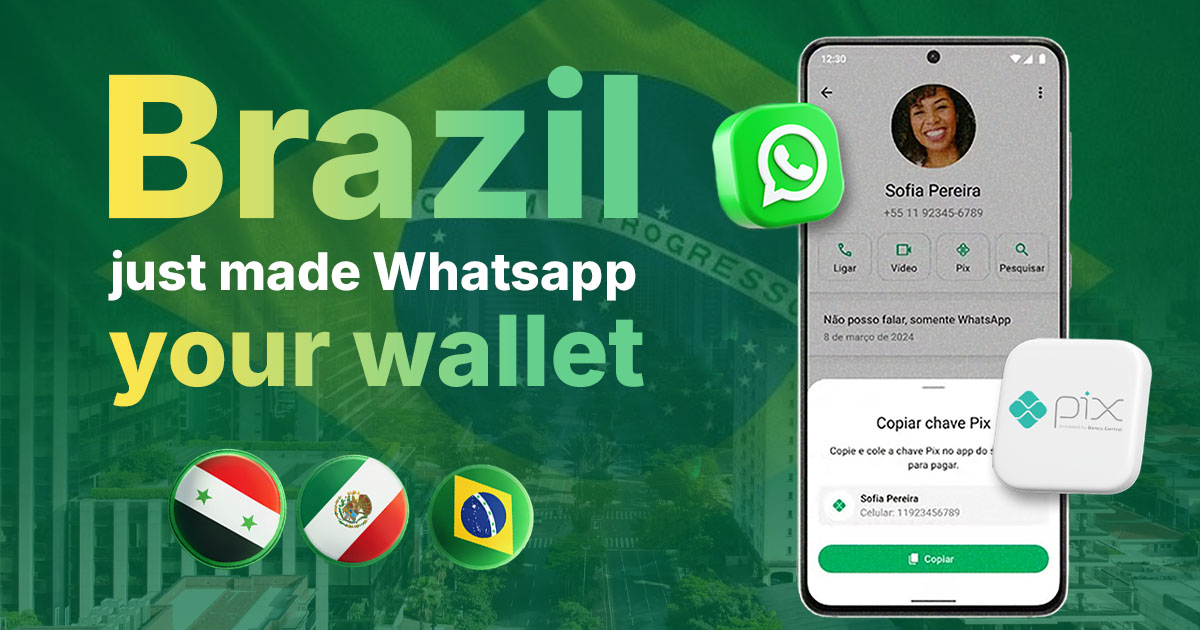
What makes Brazil particularly interesting is the payment infrastructure that grew up alongside it. Pix - the instant payment system launched by Brazil's central bank in 2020 - settled into the market with unusual speed. By the end of 2024, Pix accounted for more than 50% of all payments by value among small and medium businesses. The mechanism is simple: in a WhatsApp conversation, a seller generates a Pix key or QR code, the buyer transfers from their banking app, and the transaction settles instantly. No card required. No checkout page. No waiting.
That combination - a population that lives on WhatsApp and a payment method that works frictionlessly within a chat conversation - is what turned WhatsApp into Brazil's de facto small business sales platform. Suri, which mediates over 3 billion daily messages for more than 1,300 Brazilian clients, cites a conversion rate six times higher for WhatsApp-based sales than for traditional ecommerce.
Mexico: Fastest Transaction Growth, and an Infrastructure Gap Running Alongside It
Mexico's WhatsApp commerce story is growing faster than Brazil's in terms of transaction volume - a 38% annual increase in WhatsApp commerce transactions as of 2025. The average order value through WhatsApp commerce in Mexico is around $45 USD, one of the highest in Latin America, suggesting the channel is being used for meaningful purchases rather than just small impulse transactions.
Mexico is also the second-largest ecommerce market in Latin America, with online retail sales reaching $43.1 billion in 2024 - a 20% year-over-year increase, making it the fastest-growing online retail market in the world that year according to the Mexican Online Sales Association. WooCommerce holds a 20% share of the ecommerce platform market in Mexico.
The WhatsApp commerce dynamic in Mexico runs on a different payment rail than Brazil. Sellers work with SPEI transfers, Mercado Pago payment links, and CoDi (Cobro Digital), the government's QR-code payment system. Payment links through Mercado Pago have achieved 31% adoption in Mexican WhatsApp commerce transactions.
The friction that exists in Mexico that doesn't exist in Brazil to the same degree is financial inclusion. Around 23.5% of Mexican adults remain unbanked as of 2024. Cash on delivery still accounts for roughly 15% of WhatsApp commerce transactions, which tells you something about the reality of selling to a geographically and economically diverse country.
The Middle East: Trust-First Commerce in a High-Smartphone Market
WhatsApp usage in the GCC region - the UAE, Saudi Arabia, Qatar, Kuwait, Bahrain, and Oman - runs at over 90% of the population. In a region where mobile is effectively the only screen that matters for most consumers, WhatsApp sits at the center of daily communication in a way that has no real parallel in Western Europe or North America.
What makes the Middle East WhatsApp commerce dynamic distinct from LATAM isn't the technology - it's the cultural context. Business relationships in the Gulf and broader Arab world are built on personal trust and direct communication in ways that translate naturally onto WhatsApp. Customers prefer to speak with a person before committing to a purchase, especially for anything beyond a commodity item.
The data supports this. An ecommerce company in Saudi Arabia that deployed the WhatsApp Business API reported a 35% increase in customer retention and 20% sales growth within six months of implementation. Seasonal commerce patterns add a layer specific to the region - Ramadan is the single largest commercial period of the year, with WhatsApp campaigns during this period carrying notably higher open rates than generic broadcast messages at any other time of year.
What the Conversion Numbers Look Like Across These Markets
The gap between WhatsApp commerce conversion rates and traditional ecommerce conversion rates in these markets is large enough that it bears stating directly. According to Aurora Inbox's 2025 LATAM analysis, WhatsApp commerce achieves conversion rates of 35–42% with human-handled conversations, and 45–55% when AI-assisted automation is layered in. Traditional mobile web ecommerce in the same markets converts at 1.5–2.1%.
| Market | WA Commerce Conv. | Traditional Ecomm. | Multiplier |
|---|---|---|---|
| Brazil (LATAM avg) | 35 – 55% | 1.5 – 2.1% | ~17–26x |
| Mexico | 35 – 42% | 1.5 – 2.1% | ~17–20x |
| GCC / Middle East | 20%+ cited in case studies | ~1.5–2% | Significant |
Gallabox's 2025 analysis adds a specific timing dimension: businesses that respond to WhatsApp inquiries within the first 15 minutes see up to 80% higher conversion rates than those that respond later.
What This Means If You're Running a WooCommerce Store
The practical takeaways differ depending on whether you're already selling into these markets or considering it.
If your WooCommerce store already serves Brazilian, Mexican, or GCC customers and you're not running a WhatsApp channel yet, the gap between where you are and where a local competitor operating on WhatsApp is represents real, measurable lost revenue. The baseline is straightforward: a WhatsApp button on your product pages, a number customers in those countries can reach through their preferred app, and a response process that operates within business hours.
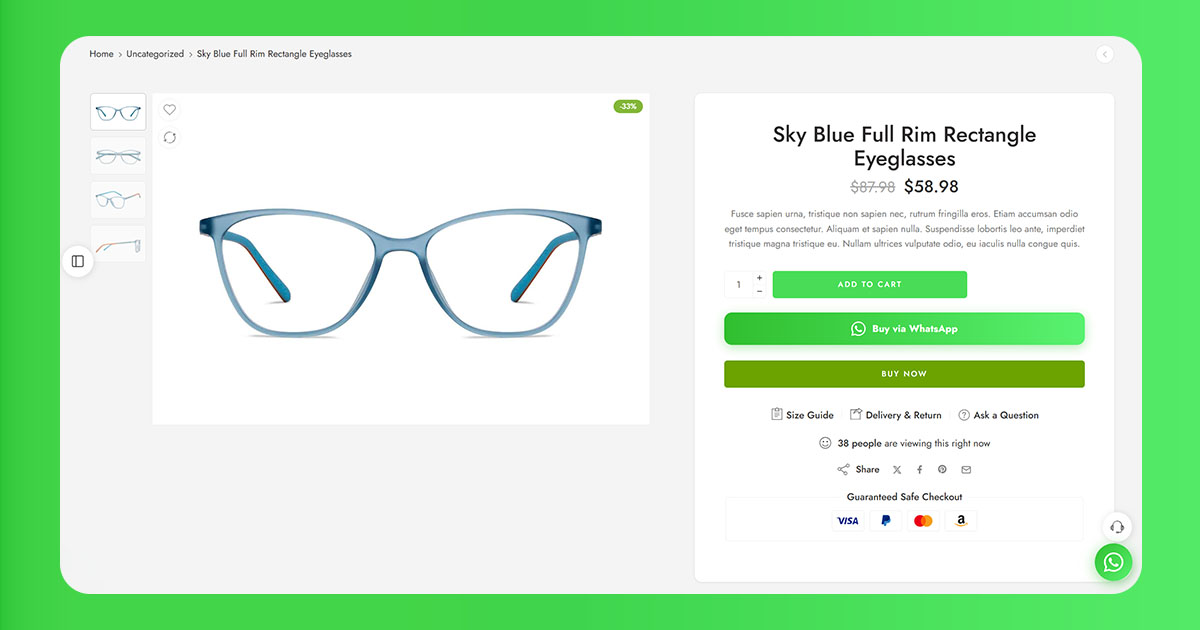
ChatCart Pro is purpose-built for exactly this setup. It places a WhatsApp button on your WooCommerce product pages, cart, and checkout; creates real WooCommerce orders in the background when customers tap; and includes per-category number routing - so if you serve both Brazilian and Mexican customers, you can route each to the appropriate team. The custom checkout form supports CPF, CNPJ, and CEP auto-fill for Brazilian stores, and the analytics dashboard shows you which product categories are generating the most WhatsApp contact in each market. Available at veloryntech.com/chatcartpro.
If you're building toward these markets, payment method integration matters at least as much as WhatsApp presence. A Brazilian customer who wants to pay by Pix through your WooCommerce checkout needs that option available. Pix payment plugins for WooCommerce exist and are straightforward to configure. A Mexican customer who pays via SPEI or Mercado Pago needs those rails.
The broader pattern from these markets is that WhatsApp commerce isn't an alternative to having a WooCommerce store - it's the customer relationship layer that sits in front of it. The store handles the product catalog, order management, and fulfillment. WhatsApp handles the discovery, the pre-purchase questions, the post-purchase support, and the repeat purchase conversations.
Selling into Brazil, Mexico, or the Middle East? ChatCart Pro adds WhatsApp ordering to your WooCommerce store with full support for Brazilian CPF/CNPJ fields, CEP auto-fill, and per-country number routing.
What's Genuinely Harder About These Markets
WhatsApp commerce in Latin America is concentrated in certain product categories. Apparel leads Brazil's social commerce market, driven by fashion and the visual nature of clothing that works well in catalog format. Electronics, furniture, and high-consideration goods are harder - the same trust-building conversation that works for a fashion purchase gets more complex when the product is expensive or requires technical questions.
Financial inclusion remains a real structural constraint in Mexico. A seller who can only accept digital payment links is effectively unreachable for the 23.5% of Mexican adults without bank accounts.
There's also a management load question that every business running WhatsApp commerce at scale eventually confronts. Real-time conversation with customers is resource-intensive. Automation can handle the routine - order confirmations, catalog browsing, FAQ responses - but the conversations that convert highest typically involve a real person at some point.
Related: WhatsApp vs. Email for E-commerce: Which Actually Gets Customer Responses? - a data-driven comparison of the two channels across open rates, CTR, and cart recovery.